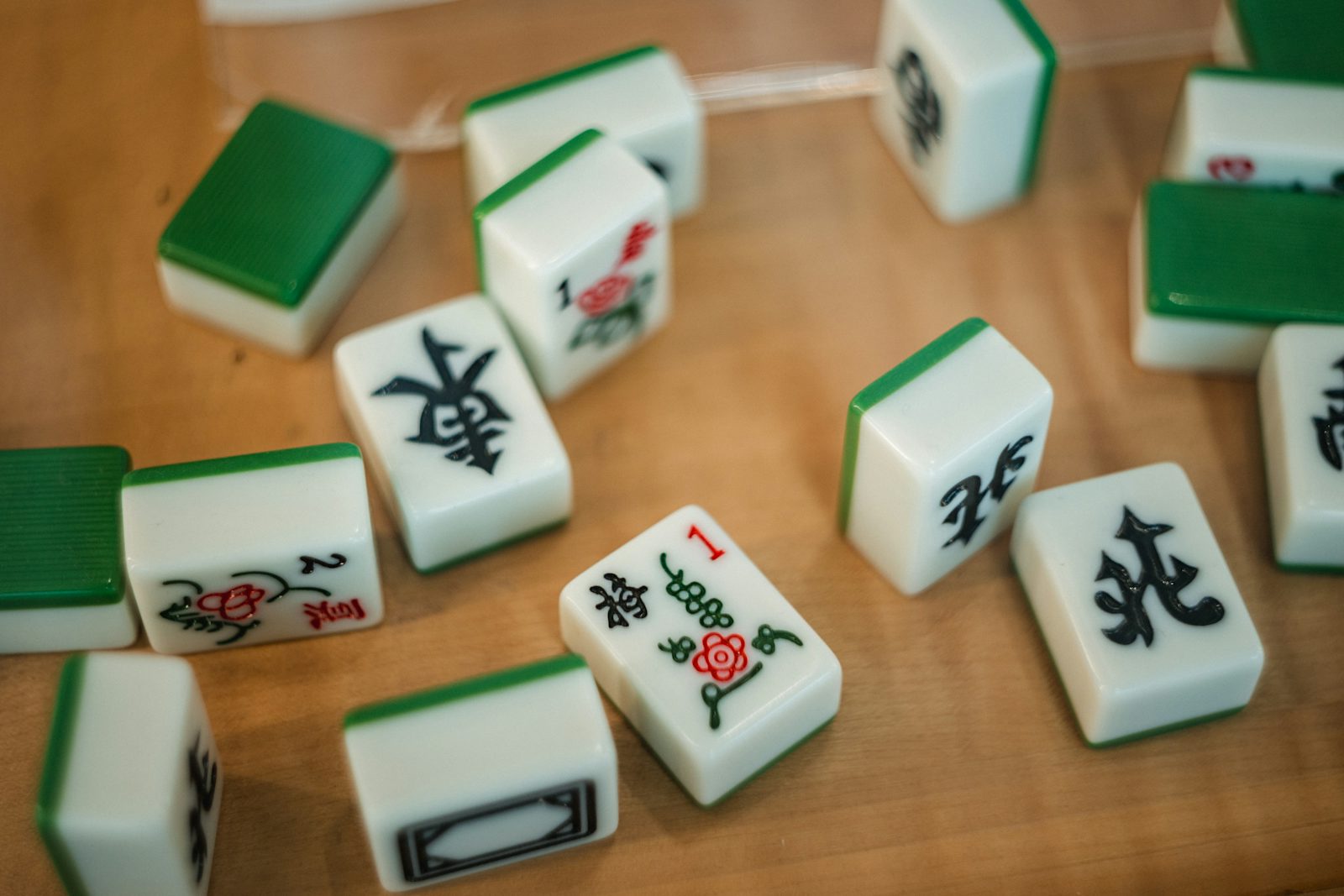
What mahjong is
Mahjong is a tile-based game for four players built on drawing, discarding, and reading the table. You build a hand from three suits and a set of honor tiles, racing to complete a valid pattern before your opponents while reading what they collect and discard. It rewards memory, probability, patience, and nerve.
Where it comes from
Mahjong took its modern form in China in the second half of the 19th century, most often traced to the lower Yangtze region around cities like Shanghai and Ningbo. It grew out of older Chinese card and tile games and spread quickly across the country, then around the world in the 1920s. Its name is written 麻將 (májiàng); in some dialects it is 麻雀, sparrow, said to echo the chatter of tiles being shuffled.
萬The tiles
A full set has 144 tiles, including bonus flowers and seasons. Three suits run one to nine: circles (筒), bamboo (索), and characters (萬), the three marks that give Chow Social its icons. To these are added the honor tiles, the four winds and three dragons. Learning to see the shapes forming across a wall of tiles is most of the early skill.
How a game flows
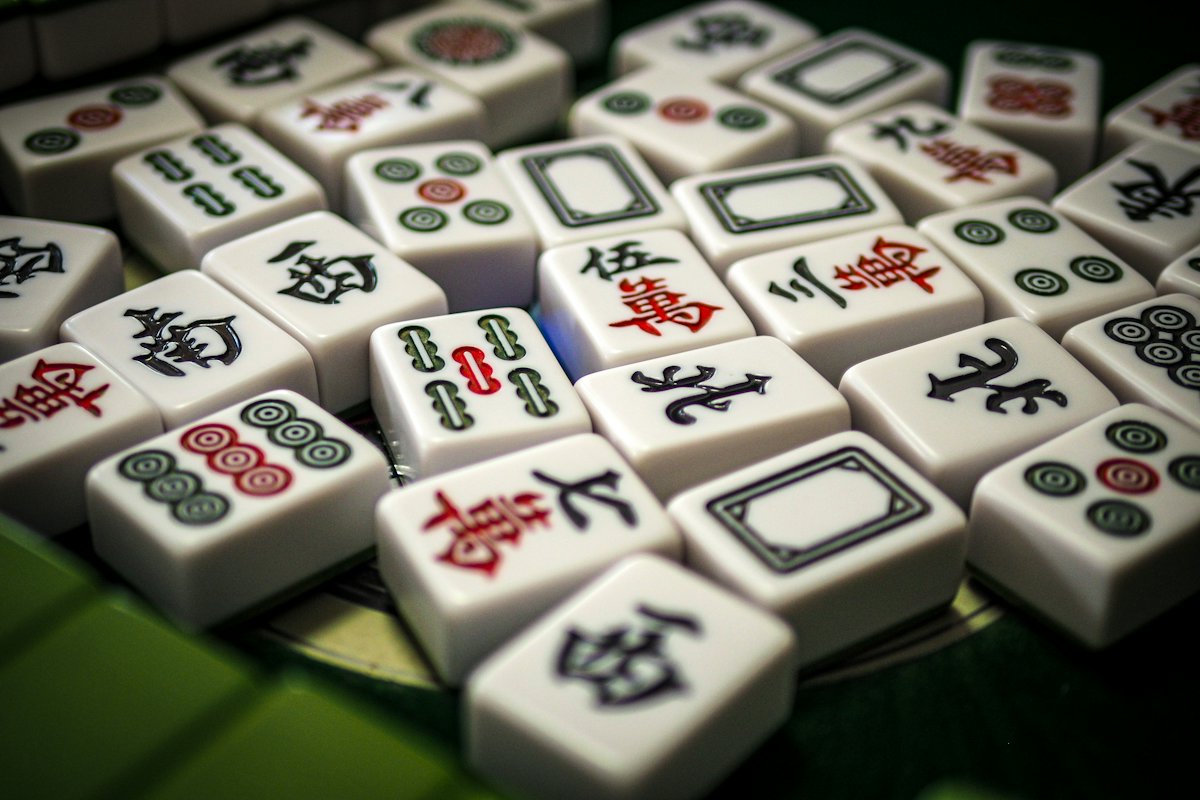
Four players sit as the four winds. Tiles are shuffled into walls, hands are dealt, and play moves around the table as each player draws a tile and discards one. You complete your hand with melds, runs and triplets, plus a pair, and claim the win. A single hand is quick; a session is many hands, and that is where skill separates from chance.
A game of skill
Any single hand carries luck in the draw. Across a session, skill dominates: which tiles you keep, when you defend, what you read into a discard, how you manage risk when a hand turns. That is why we score across a season rather than a single night, and why points here are game scores that measure skill, never money staked.
萬Around the world
Mahjong grew into many living traditions: Cantonese and other Chinese regional styles, Hong Kong old-style, Japanese Riichi with its rich scoring, Taiwanese sixteen-tile hands, and the American game with its jokers and yearly card. The tiles are shared; the rules are a family, not a single book. Chow Social venues set their own house style.
Manual and automatic tables
New players often do not know there are two kinds of table. It changes the pace and feel of a session, so it helps to know what you are booking.
Manual table
How it works
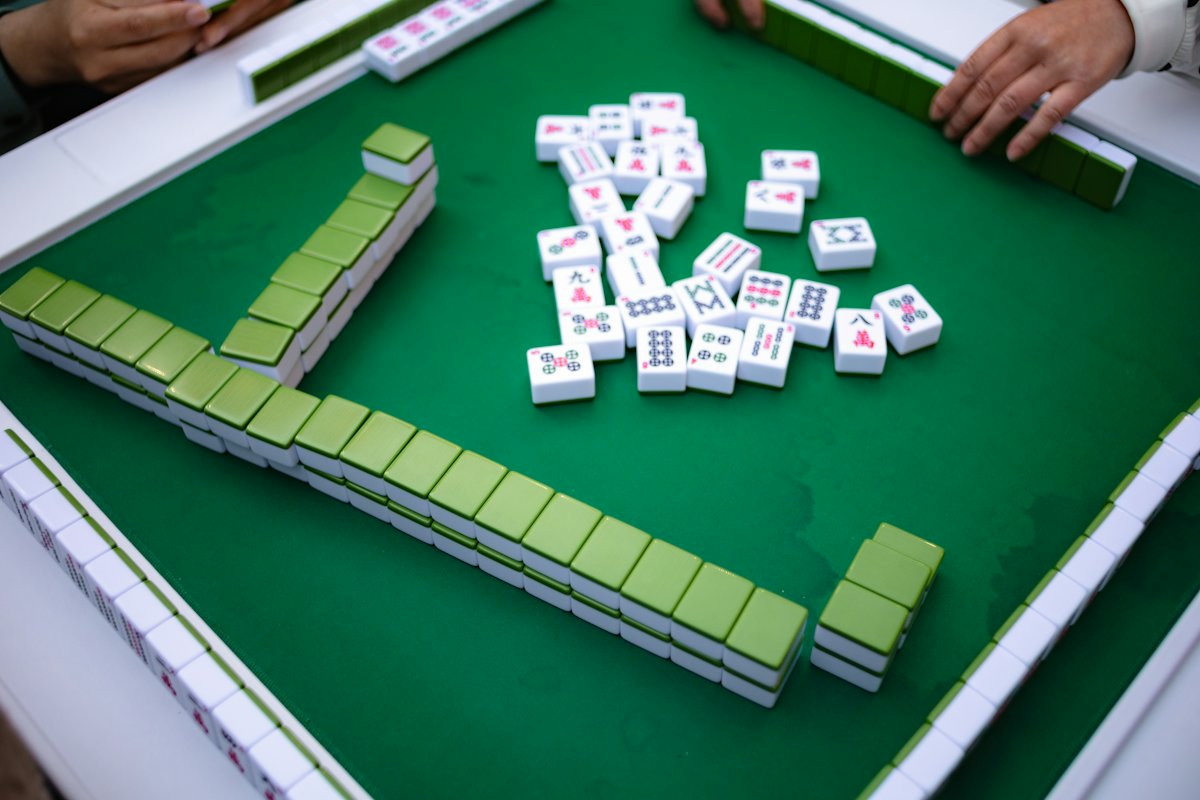
Players shuffle the tiles by hand (washing the tiles) and build the walls together before each hand.
Feel
Traditional and tactile. The shuffle is part of the ritual and the conversation.
Automatic table
How it works
A machine inside the table shuffles the tiles and raises a fresh wall from the centre for you.
Feel
Faster and smoother. More hands per session, less setup between them.
A word on etiquette
Mahjong is as much about the company as the competition. Arrive on time, keep the game moving, play your own hand, and be gracious in a win or a loss. Respect the table and the people at it, and the game takes care of itself.
Mahjong today
Once a pastime of teahouses and family gatherings, mahjong is now played in clubs, tournaments, and online worldwide, and it remains what it has always been: a reason to sit down together. Chow Social exists to make that easier to find, one table at a time.